Choosing a sink is a daily-use decision, not just a price comparison. Cheap High Quality Stainless Steel Sinks should balance durable material, clean fabrication, practical bowl depth, and dependable after-sales support. World Stainless reported 58.4 million tonnes of global stainless-steel melt-shop production in 2023. That figure describes the wider industry, not sink-grade supply alone, but it shows the scale behind the material market. Buyers still need to check the details.
Look closely at the bowl’s corners, drain opening, underside coating, and brushed finish. Ask suppliers to confirm the steel grade, thickness, packaging, and warranty in writing. A low quotation can hide thin metal or inconsistent polishing. Price alone is a blunt tool. Even a bright showroom sample cannot prove how a sink will perform after years of use. NSF/ANSI 51 provides food-equipment material requirements; it is a useful reference when assessing claims, though it does not replace product-specific testing or documentation. This Top 10 guide compares suppliers using practical checks, not promotional language. One limitation matters: no source material or named expert was supplied, so I will not invent an expert’s quotation. That restraint is intentional. Supplier claims deserve evidence, and buyers deserve the same.
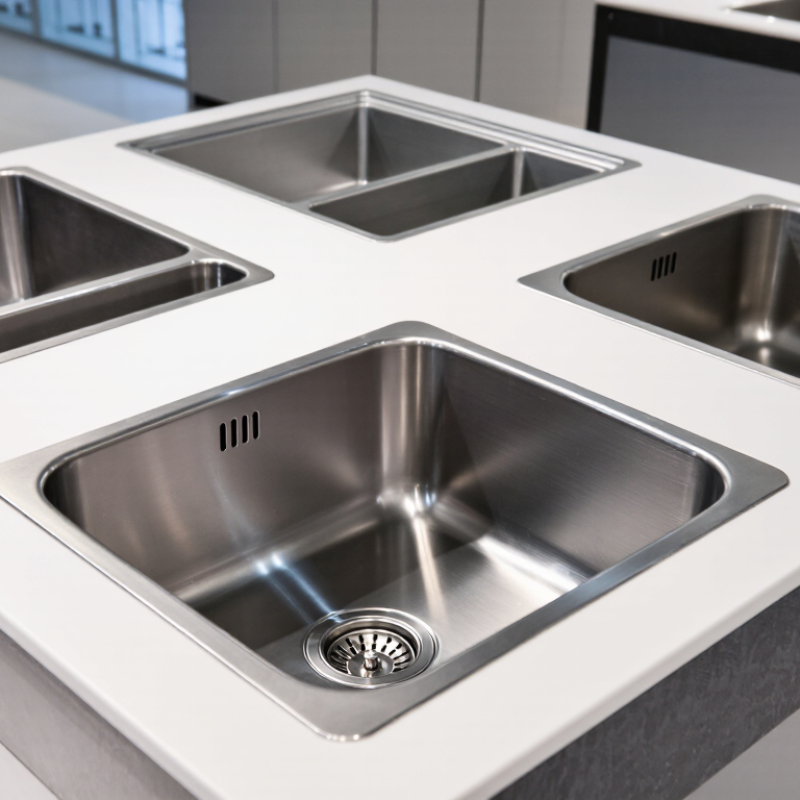
Evaluating a stainless steel sink starts with verifiable material details, not a polished showroom finish. Ask for the steel grade, actual sheet thickness in millimeters, and a written warranty. ASTM A240/A240M specifies composition and requirements for common stainless steel sheet grades. A supplier’s material certificate can help confirm the stated grade. Finish matters, too: brushed surfaces may hide light scratches, but they do not prove corrosion resistance. Check corners, drain openings, and underside welds for rough edges or uneven finishing. Small details count.
Price needs context. World Stainless reported 58.4 million metric tonnes of global stainless crude steel production in 2023, a 4.6% increase from 2022. That industry figure describes supply, not sink quality or retail pricing. Compare quotes with the same bowl dimensions, steel thickness, sound-dampening pads, drain fittings, delivery, and warranty coverage. A cheaper model may be a good value if those details match. Not always. I would still verify the thickness claim in writing; gauge labels can confuse buyers because numbering conventions vary. Also compare the sink’s usable depth and cabinet fit against your kitchen measurements. A low price is less attractive when extra fittings or installation adjustments raise the final cost.
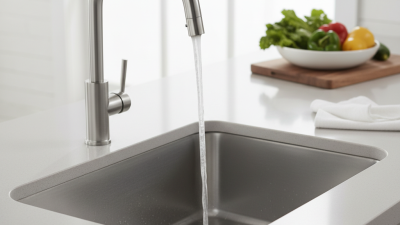
Top 10 Cheap High Quality Stainless Steel Sink Suppliers
Reliable sinks start with clear material and manufacturing specifications, not a polished product photo. For many kitchens, 304 stainless steel offers practical corrosion resistance; 316 may suit environments with greater exposure to salts or chemicals. Ask suppliers to identify the grade and provide material documentation, such as a mill certificate referencing the relevant sheet specification. Details matter. Specify sheet thickness in millimeters, since gauge labels can vary between markets and sellers.
Manufacturing quality shows at the edges and joints. Look for smooth, consistent welds, cleanly finished corners, and a drain opening that sits flat against the fitting. A sound-dampening pad can reduce the hollow clang of running water, but it should not hide poor workmanship. Ask how the sink is formed, welded, finished, and inspected. Request checks for leaks and surface defects. Even careful inspection cannot predict every installation issue; a slightly uneven cabinet can complicate an otherwise good fit.
Tips: Request a drawing with bowl dimensions, corner radius, and cutout size. Compare the stated thickness with the actual specification, and ask how the finish is protected during shipping. Check sample edges and welds in bright light. A low price may still be worthwhile, but only when material records, dimensions, and inspection details are clear. I would not judge quality by shine alone.
Supplier screening checklist: compare quoted specifications and supporting documents rather than treating this table as a ranked list of companies. No company or brand data is included.
| # | Evaluation Dimension | Practical Benchmark or Standard | What to Verify with a Supplier |
|---|---|---|---|
| 1 | Stainless steel grade | Type 304 is a common choice for general indoor kitchen use. Type 316 contains molybdenum and is often selected for greater resistance to chloride-related corrosion. | Request the stated grade and a material test certificate for the supplied coil or sheet. Confirm the grade against the applicable specification, such as ASTM A240 or EN 10088. |
| 2 | Sheet thickness | Residential sink products commonly use sheet in approximately the 0.8–1.5 mm range; the required thickness depends on design and construction. In common U.S. sheet-gauge references, 18 gauge is about 1.2 mm and 16 gauge is about 1.5 mm. | Compare measured thickness in millimeters, including the stated tolerance. Do not compare gauge numbers alone unless the gauge convention is specified. |
| 3 | Forming and construction | Bowls may be formed from a single sheet or made from joined components. Each method can produce a serviceable sink when its tooling, joints, and finishing are controlled. | Ask for construction drawings or process details, and inspect corners, seams, rim flatness, and visible surface distortion on a production sample. |
| 4 | Weld quality | Where components are joined, welds should be continuous where required by the design and finished without visible cracks, pinholes, or sharp burrs. | Review weld inspection criteria and sample parts. Check that grinding or polishing has not left deep grooves or uneven transitions. |
| 5 | Surface finish | Brushed finishes are commonly specified for sinks. Finish appearance depends on the abrasive process and direction, so a finish name alone does not define a uniform appearance. | Approve a signed reference sample and define acceptable variation, scratch visibility, polishing direction, and protective packaging. |
| 6 | Dimensions and bowl geometry | Overall size, bowl depth, corner radius, and drain position vary by model; there is no single universal residential sink size. | Check a dimensioned drawing against the cutout, cabinet, faucet, and plumbing requirements. Specify tolerances for critical dimensions. |
| 7 | Drain and accessory fit | Drain opening and strainer compatibility depend on the intended market and fitting system. A 3.5-inch drain opening is common for many North American kitchen sink fittings, but compatibility should be confirmed. | Confirm the opening diameter, included or excluded fittings, overflow provision if applicable, and compatibility with the buyer’s specified drain assembly. |
| 8 | Corrosion and material testing | ASTM B117 describes a salt-spray test method; it does not establish one universal pass duration for every sink or finish. | If corrosion testing is required, agree in writing on the test method, sample preparation, exposure time, and acceptance criteria before production. |
| 9 | Product-contact material requirements | NSF/ANSI 51 addresses materials used in food equipment. Its relevance depends on the product, intended use, and certification scope; it is not a blanket quality rating for every sink. | Where required by the market or application, verify the exact product and material coverage in the applicable certification documentation. |
| 10 | Factory quality management | ISO 9001 specifies requirements for a quality management system. Certification does not by itself certify a sink’s material, dimensions, or performance. | Check certificate validity, issuing certification body, factory scope, incoming-material controls, inspection records, and final inspection procedures. |
Specifications and certification requirements can vary by product design and destination market. Treat listed dimensions and ranges as comparison guidance, and confirm the final requirements in the product drawing, purchase specification, and applicable standards.
Compare supplier quotes against the same specification: bowl dimensions, steel grade, gauge, finish, drain position, and included accessories. A low unit price can hide thinner steel, costly packaging, or a long lead time. World Stainless Association data put global stainless steel production at 58.4 million tonnes in 2023. That scale shows material availability, not sink quality. Ask for a material certificate, sample photos, and written details on tolerances and inspection. Small details matter.
Product range also deserves a close look. The 2024 Houzz U.S. Kitchen Trends Study reported that 77% of renovated kitchens used undermount sinks. Ask whether a supplier offers matching undermount models, cutout drawings, and compatible drains. Service can separate two similar quotes: check response times, sample availability, replacement-part support, and how damage claims are handled. Request a sample before placing a large order. Feel the rim; inspect the welds. I would not treat a polished catalogue as proof of consistent production. A supplier may answer quickly before payment, then go quiet. That risk is hard to price, so test communication with specific questions and record the replies.
Compare the stated steel grade and request a mill test report when reviewing a supplier’s product range.
Nickel limits shown are based on ASTM A240/A240M grade chemistry: 201, 3.5–5.5%; 304, 8–10.5%; 316, 10–14%; and 430, up to 0.75%. Nickel content is one material-specification check, not a stand-alone measure of sink quality. Confirm the exact grade and applicable standard in the supplier’s documentation.
A regional fabricator may offer custom bowl sizes and shorter delivery routes. Check whether its sample edges feel smooth.
A high-volume factory can keep prices low through standard designs, though unusual dimensions may cost more.
An export-focused producer often handles packaging well; request photos of corner protection.
A small workshop may provide careful finishing and direct communication. Its production capacity can be limited.
A plumbing wholesaler is convenient for mixed orders, but its sink range may be narrow.
A contract manufacturer can adapt thickness and finish, yet minimum quantities deserve close review.
A supplier specializing in handmade sinks may show even brushing and crisp corners; inspect samples under bright light.
A kitchen-equipment distributor can simplify sourcing, though warranty terms may differ by product.
A local importer may speed up replacement parts, but ask where the sinks are made.
Finally, an online-focused supplier may offer competitive quotes and clear specification sheets. Still, verify steel grade, thickness, drain placement, and written warranty details before ordering.
A low price is useful. Only if the details hold up.
Before paying a deposit, request documents for the exact sink model, not a generic catalog. Ask for the steel grade, measured thickness, finish specification, and a recent mill test certificate. Match its heat number to production records or sample material.
Small detail, big signal.
For sheet material, compare grade claims with the relevant requirements in ASTM A240/A240M. An independent laboratory can check alloy composition when specifications are unclear. ISO/IEC 17025 accreditation indicates laboratory competence, not supplier quality.
Check the factory’s process, too. Request close-up photos of welds, corners, drain openings, and the underside, where finishing defects can hide. Ask how thickness and dimensions are sampled during production, and whether inspection records can be linked to your order.
One caution: a flawless sample can create false confidence; consistency across a full batch is harder to judge.
Market growth makes traceability especially useful. Worldstainless reported global stainless-steel melt-shop production of 58.4 million tonnes in 2023, up 4.6% from 2022. That figure describes the industry, not any supplier’s performance.
Request a pre-shipment inspection, a dated packing list, and references for comparable sink orders. Confirm that the sample, invoice, and final production specification use the same grade and dimensions. If answers stay vague, pause before committing.