China is a major sourcing base for stainless steel sinks, with manufacturers serving residential, commercial, and hospitality projects. But “top” does not mean the same thing to every buyer. One kitchen may need a deep, quiet basin for heavy daily use; a compact bathroom may call for clean lines and careful use of limited counter space.
This guide explores China Top Stainless Steel Kitchen and Bathroom Sinks by focusing on practical selection criteria, not unsupported rankings. It examines steel grades, basin depth, thickness, surface finishes, sound-dampening features, and installation styles. These details affect durability, cleaning, noise, and fit. A bright finish can look impressive under showroom lights. It may also show water marks more clearly at home.
Stainless Steel Kitchen And Bathroom Sinks vary widely in design and build quality. Buyers should compare product specifications, request clear drawings, and confirm dimensions before placing an order. Supplier checks matter, too: ask about material documentation, inspection procedures, packaging, and customization limits. A polished catalog is not proof of consistent production. Nor does a low price explain what has been left out.
Small details count. Check the drain position. Review the corners. Confirm the carton protection. Where possible, assess samples under ordinary lighting and ask how the sink is tested. This article offers a structured starting point for comparing Chinese suppliers and matching products to real project needs. No single sink suits every space, and some trade-offs remain. Being clear about them is more useful than chasing a perfect-looking specification.
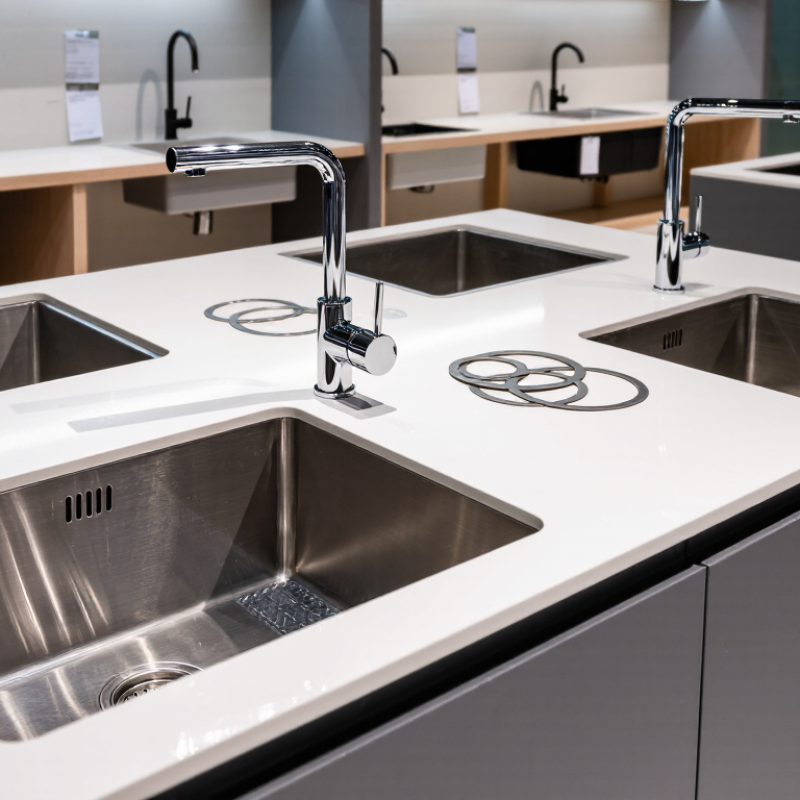
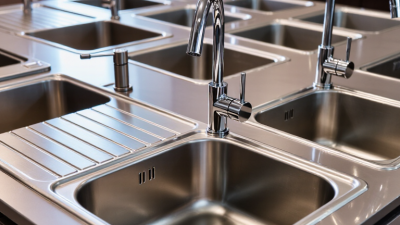
China-made stainless steel sinks generally come in pressed, welded, and workstation designs. Pressed bowls are formed from one sheet, giving them rounded corners and a smooth, easy-clean surface. Hand-welded models allow sharper corners, deeper bowls, or custom dimensions, but weld quality and finishing can vary. Workstation sinks add ledges for sliding boards or colanders. Useful, though accessories can crowd a small counter.
Kitchen models are commonly top-mount, undermount, or integrated into a countertop. Single bowls suit large pans; double bowls help separate washing and rinsing. Look closely at steel grade, sheet thickness, sound-deadening pads, drain position, and edge finish. A polished sample can hide rough seams. Fit matters.
Bathroom options include compact hand-rinse basins, undermount bowls, and vessel-style sinks. Stainless steel can work well in utility rooms or contemporary bathrooms, but water spots show readily on bright finishes. The International Stainless Steel Forum reported 58.4 million tonnes of global stainless-steel production in 2023, up 4.6% year over year. This figure describes the wider material industry, not sink output specifically. When comparing Chinese suppliers, request drawings, material certificates, and close-up photos of corners and drain joints. Small details matter. A sample inspection is still worth the extra time.
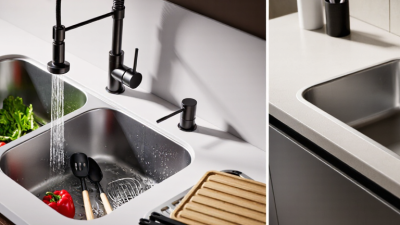
A sink’s performance begins with its sheet, not its shine. Manufacturers select stainless steel by considering corrosion resistance, formability, thickness, and the sink’s intended environment. Many bowls are shaped from a flat blank in a hydraulic press. Controlled drawing helps create smooth corners without thinning the steel too much. Edges are trimmed, surfaces brushed, and mounting points formed. Welded designs need clean, carefully finished seams.
The process reflects a much larger materials industry. worldstainless reports that global stainless steel melt-shop production reached 58.4 million tonnes in 2023, up 4.6% from 2022, in its Stainless Steel in Figures 2024 report. That figure describes all stainless steel production, not sink output. Still, it shows the scale of the supply chain behind sink-grade sheet. A mirror finish can look impressive, yet poor corner geometry or uneven polishing may matter more in daily use.
Tips: Check the bowl’s corner radius, drain position, and underside sound pads. Ask for the steel grade and thickness, too. These details are easy to miss in product photos. A small caveat: thicker steel can feel sturdier, but installation, support, and fabrication quality also affect the result.
Stainless-steel sinks made in China can vary widely in material and workmanship. Grade 304 is commonly selected for kitchens because it offers useful corrosion resistance in everyday conditions. Grade 201 may cost less, but its performance can differ, especially in damp or coastal settings. Grade 316 contains molybdenum and can better resist chloride exposure, though it is not necessary for every home. Ask for a material certificate, not just a grade printed on a sales sheet.
Details matter. Check the steel thickness, bowl depth, welds, and underside coating. A thin sink may sound louder when a tap runs, while rough welds can collect residue. Finish affects upkeep: brushed surfaces tend to disguise small scratches, whereas mirror finishes show fingerprints quickly. Looks are not the whole story.
For quality checks, request applicable test reports and confirm what each report actually covers. Standards and testing methods may differ by product and destination market, so avoid treating a single certificate as proof of overall quality. Inspect drain alignment, overflow openings, and edge flatness on a sample. A polished surface can hide flaws. Even careful checks miss things sometimes; that is worth admitting. Ask how defects, packaging damage, and replacement parts are handled before placing a large order.
China’s sink manufacturing network is concentrated around metalworking and sanitary-ware clusters, especially in Guangdong, Zhejiang, and Fujian. Foshan and nearby Pearl River Delta cities offer access to stainless-steel processors, press shops, polishing services, and component suppliers. Zhejiang’s coastal manufacturing centers also support metal fabrication and export logistics. The exact mix varies by factory.
The scale of the wider materials sector is substantial. The World Stainless Association’s Stainless Steel in Figures 2024 reports that China produced about 36.7 million tonnes of crude stainless steel in 2023, roughly 63% of global output. This is not sink-production data. It does, however, indicate a deep domestic supply base for common grades and sheet products. Buyers should still confirm the actual steel grade, thickness, and traceability used for each model.
Factory capabilities differ. A polished sample can hide uneven welds beneath the bowl or thin sound-deadening pads. Ask for production samples, dimensional checks, and records of finish inspection. Visit the line when possible. Regional reputation alone is not enough.
One detail is easy to miss: a strong cluster may provide more supplier choices, but it does not guarantee consistent quality from every workshop.
China’s stainless steel kitchen and bathroom sinks vary in more than shape. Compare steel grade, sheet thickness, bowl depth, and finish. Ask suppliers to state these details in writing. “Heavy-duty” is not a specification.
Request drawings with exact dimensions, corner radii, and drain positions. Check that each sink fits your cabinet and plumbing layout. Inspect samples closely: feel the edges, examine the welds, and look underneath for sound pads. Run water across the bowl. Does it drain evenly, or leave a small puddle? Details matter.
When sourcing from China, compare quotations against the same specification, not just the unit price. Confirm packaging, sample costs, production time, inspection steps, and spare parts. Ask how thickness is measured; readings can vary across a sink’s body. That detail is easy to miss. Review inspection records and agree on acceptable cosmetic variation before production. A sample may look perfect, while a full batch can differ. It happens. Keep decisions in writing and allow time for revisions. A rushed choice can cost more later.
Use this comparison table to define requirements, assess supplier samples, and request comparable quotations. Specifications and commercial terms vary by product and supplier; confirm them in writing before ordering.
| Comparison dimension | What to compare | Practical sourcing guidance | What to verify |
|---|---|---|---|
| Stainless steel grade | Grade stated for the bowl, rim, clips, and other stainless components | Type 304 is widely used for sinks where corrosion resistance is important. Lower-cost grades may have different corrosion resistance and composition. | Request the specified standard and a material test report for the actual production material. Consider independent material testing for higher-risk orders. |
| Sheet thickness | Actual steel thickness, stated in millimetres, and whether it refers to the bowl or the full sink | Residential stainless-steel sink bowls commonly use sheet thicknesses around 0.8–1.2 mm, but products and market requirements vary. Do not compare gauge labels alone. | Confirm the measurement method, tolerance, and measurement points. Check a sample with a suitable thickness gauge. |
| Sink type and installation | Single bowl or double bowl; top-mount, undermount, or another installation style | Choose a design that matches the countertop material, cabinet dimensions, cut-out, and intended installation method. | Request dimensioned drawings, cut-out templates, mounting hardware details, and confirmation of included accessories. |
| Dimensions and bowl geometry | Overall length, width, depth, corner radius, bowl capacity, and drain position | Compare usable bowl dimensions as well as the outside dimensions. Deeper or larger bowls may affect cabinet clearance and plumbing space. | Check drawings against the target cabinet and countertop. Approve a production-representative sample before mass production. |
| Surface finish | Brushed, satin, polished, or another specified finish | Finish changes the appearance and how visible everyday marks may be. Use the same finish specification when comparing quotations. | Approve a physical finish sample and define acceptable variation, scratch limits, and protective-film requirements. |
| Noise and condensation control | Sound-dampening pads, undercoating, and their coverage | These features can reduce noise and condensation, but their presence and extent differ across models. | Specify the materials, locations, and coverage in the product specification; inspect the underside of the sample. |
| Drainage and accessories | Drain opening, waste fitting, overflow, basket strainer, clips, and optional accessories | Accessory inclusion can affect the quoted price and compatibility. Bathroom basins and kitchen sinks may use different fittings. | List every included item, material, size, and finish in the quotation and purchase specification. |
| Quality checks | Dimensions, finish, welds, drainage, leakage, and packaging inspection | Agree inspection criteria before production. Inspection scope should reflect the order size, product risk, and destination requirements. | Request a written quality plan and inspection records. Consider a pre-shipment inspection by an independent inspection provider. |
| Compliance and documentation | Applicable destination-market requirements, test reports, and product documentation | Requirements depend on the destination, product type, and intended use; there is no single certification that applies to every sink shipment. | Identify applicable rules before ordering and verify that documents match the model, materials, and shipment being purchased. |
| Quotation and total landed cost | Unit price, tooling, packaging, sample charges, freight, duties, and payment terms | Compare quotations on the same specification and delivery basis. A lower unit price may not mean a lower total landed cost. | Request an itemized quotation, clarify the trade term and named place, and confirm which costs are excluded. |
| MOQ, lead time, and capacity | Minimum order quantity, sample timing, production schedule, and available capacity | These terms depend on the design, finish, order volume, and production schedule; confirm them for the specific order. | Get a dated production plan, confirm how changes affect timing, and agree how delays will be communicated. |
| Packaging and transport protection | Individual protection, carton strength, palletization, and container loading | Packaging should protect polished surfaces and edges during handling and transport. Requirements may differ for retail and bulk shipments. | Approve packaging specifications and a packed sample; confirm carton markings and loading instructions before shipment. |
Thickness ranges and product features above are general comparison guidance, not a guarantee for any particular model. Confirm final specifications, tolerances, compliance obligations, and commercial terms with the supplier before placing an order.