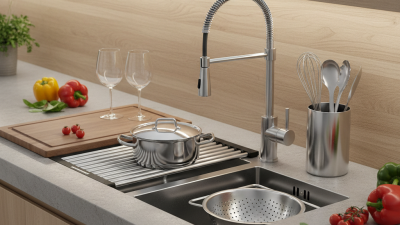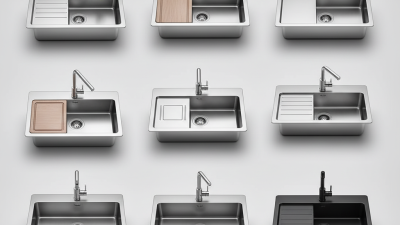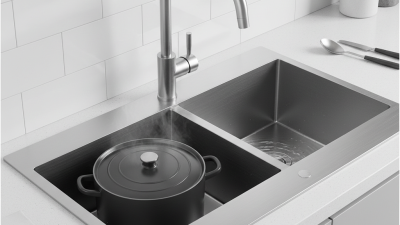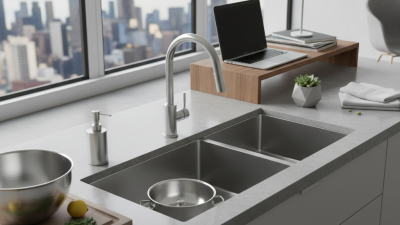
Choosing a China supplier for a Uniquely Designed Stainless Steel Sink requires more than comparing prices and product photos. A reliable supplier should demonstrate practical experience, controlled manufacturing, and consistent quality records. This introduction explores how distinctive sink designs can remain functional, hygienic, and suitable for demanding kitchens.
Dieter Rams, a respected industrial design authority, stated, “Good design is as little design as possible.” His principle applies strongly to modern stainless steel sinks. A bold workstation sink may include sliding accessories, integrated drainboards, softened corners, or custom-depth bowls. Yet every feature should support daily use. A beautiful edge is not enough. Water must drain properly, accessories must fit securely, and the surface should be easy to clean.
Reliable evaluation begins inside the factory. Buyers should inspect stainless steel grades, sheet thickness, welding quality, polishing consistency, and sound-deadening treatment. Request material documentation, production samples, inspection reports, and clear packaging details. A polished photograph proves little. A factory visit or independent inspection offers stronger evidence.
China has many capable manufacturers, but quality varies between suppliers. Some provide impressive prototypes and weak mass production. Others have excellent equipment but limited design support. This guide will examine supplier experience, customization capability, production control, export reliability, and after-sales communication. It will also consider an uncomfortable point: the most innovative design may not be the best commercial choice. Complex shapes can increase cleaning difficulty, tooling costs, and replacement risks. The strongest supplier balances appearance with long-term performance. That balance deserves careful testing.
China Top Uniquely Designed Stainless Steel Sink Supplier?
Stainless steel grade matters more than an attractive sink shape. Grade 304 is commonly called 18/8 because it contains about 18% chromium and 8% nickel. ASTM A240/A240M specifies a broader range: approximately 17.5–19.5% chromium and 8–10.5% nickel. Chromium forms a thin passive film that protects the surface. Nickel helps stabilize the austenitic structure and improves corrosion resistance.
This chemistry suits kitchens, where water, food acids, and daily cleaning meet. A 304 sink should resist ordinary rust better than lower-alloy alternatives. Still, it is not rust-proof. Salt deposits may stain around the drain, welds, or scratched areas. I have found that a quick rinse and dry often protect the surface better than aggressive cleaners. Small habits matter.
The World Stainless Association reported global crude stainless steel production of about 58.4 million tonnes in 2023. That scale shows the material’s industrial importance, but volume alone cannot verify a sink’s grade. Buyers should request a mill certificate, thickness data, and welding inspection records. A bright finish proves little. The 18/8 label is helpful, yet it should not replace chemical testing or supplier verification. Even experienced buyers can overlook this detail.
Stainless steel grade 304 typically contains about 18% chromium and 8% nickel by weight. Chromium supports corrosion resistance, while nickel helps improve formability, toughness, and resistance to many corrosive environments.
Representative composition values shown in weight percent. Actual limits vary by applicable standard and product specification. Grade 430 is represented with approximately 0.5% nickel; its nickel content is commonly specified as a maximum of about 0.75%.
China’s sink manufacturing base supports large-scale production and flexible custom design. Experienced factories often combine automated cutting, deep drawing, precision welding, and hand polishing. A modern line can produce thousands of bowls monthly, but capacity varies by model, thickness, and finishing method. Ask for actual output records, not only attractive catalog figures.
Reliable suppliers identify stainless steel grades, commonly 304, with clear thickness tolerances and material traceability. Export preparation should include dimensional checks, welding inspection, surface review, and protective packaging. Depending on the destination, products may need to meet standards such as EN 13310 or buyer-specific testing requirements. Confirm certificates, test reports, inspection procedures, and container-loading photos. Small details matter. A damaged corner can erase a good production advantage. No factory is perfect, so honest suppliers should explain corrective actions and possible production limits.
Tips: Request a sample before bulk production. Compare its gauge, drainage, welds, sound pads, and finish under direct light. Check whether the sample matches the approved drawing. Capacity claims can be optimistic. Independent inspections add useful assurance, especially for new suppliers or complex designs.
A unique sink should work beautifully, not merely look different. Bowl depth is the first practical test. An 8–10 inch bowl handles cookware well, while deeper bowls may strain shorter users. The 2024 U.S. Kitchen Trends Study reported that single-bowl sinks appeared in about 62% of upgraded kitchens. This preference reflects easier cleaning and better space for large pans.
Gauge thickness affects noise, vibration, and dent resistance. A 16-gauge sheet is approximately 1.5 mm thick, while 18-gauge steel is about 1.2 mm. Thicker steel usually feels steadier, but construction quality still matters. ASTM A240 requirements address stainless steel composition and performance, not every detail of sink fabrication. Radius also deserves attention. A 10–20 mm corner radius offers a modern appearance and simpler wiping. Tight corners look sharp, but collect residue quickly. Drainage should guide water toward the outlet without visible pooling. Poor slope design can make even premium steel frustrating.
China Top Uniquely Designed Stainless Steel Sink Supplier?
A reliable sink supplier should prove quality before discussing design. ISO’s 2022 Survey recorded over 1.2 million ISO 9001 certificates worldwide. This figure shows the system’s reach, not automatic product quality. Ask for the current certificate, factory scope, audit date, and corrective-action records. A certificate covering trading activities may not cover sink production. That detail matters.
For AISI 304, require a heat-number traceable mill certificate and independent verification when risk is high. ASTM A240 commonly specifies about 18–20% chromium and 8–10.5% nickel for 304 stainless steel. Portable PMI testing can check alloy identity on incoming sheets. Laboratory reports are stronger evidence. Surface appearance alone is not enough. It can look perfect.
The 1.2–1.5 mm gauge range affects rigidity, noise, weight, and forming performance. Measure several points with a calibrated micrometer, including bowl walls, rims, and corners. Do not test only one attractive sample. ISSF reported global stainless crude steel production at approximately 58.4 million tonnes in 2023, so material availability is broad, but consistency still varies by batch. My practical concern is simple: thicker steel can still fail with poor welding or weak supports. Quality checks must include weld inspection, water-leak testing, dimensional checks, and packaging review. Some suppliers provide excellent documents but inconsistent production. Keep sampling.
| Quality Dimension | Verification Requirement | Inspection or Test Method | Typical Acceptance Criteria | Recommended Evidence | Priority |
|---|---|---|---|---|---|
| ISO 9001 Quality Management System | Confirm that the manufacturing site operates a documented quality management system. | Review the current certificate, certification scope, issuing body, validity period, and manufacturing address. | Certificate is valid, site-specific, and covers the manufacture or processing of stainless steel sinks or related metal products. | Current ISO 9001 certificate, audit records, corrective-action log, and documented inspection procedures. | High |
| Stainless Steel Grade | Verify that the bowl and visible structural components are made from AISI 304 stainless steel when specified. | Positive Material Identification using X-ray fluorescence or an equivalent laboratory method. | Material chemistry is consistent with the selected 304 stainless steel specification and matches the purchase order. | Mill test certificate, heat number traceability, and independent PMI report for sampled products. | High |
| 304 Stainless Steel Chemistry | Check the principal alloying elements associated with 304 stainless steel. | Laboratory chemical analysis or review of a traceable mill certificate. | Typical 304 composition includes approximately 18% chromium and 8% nickel, with the balance and limits controlled by the applicable material standard. | Elemental analysis report showing chromium, nickel, carbon, manganese, silicon, phosphorus, and sulfur results. | High |
| Steel Gauge and Thickness | Verify the specified 1.2–1.5 mm thickness range for the sink bowl, rim, and other defined components. | Calibrated micrometer or ultrasonic thickness gauge at multiple points, including flat and formed areas. | Measured thickness meets the agreed drawing tolerance and does not fall below the contractual minimum after forming. | Incoming coil records, in-process measurement sheets, calibration certificates, and pre-shipment inspection results. | High |
| Dimensional Accuracy | Confirm overall length, width, depth, corner radius, drain position, and installation clearance. | Calipers, height gauges, templates, and a controlled drawing or approved golden sample. | All critical dimensions remain within the approved drawing tolerances and fit the intended countertop or cabinet opening. | Signed dimensional inspection report with measured values, tolerances, and sample identification. | High |
| Weld and Joint Quality | Inspect welded corners, drain areas, brackets, and any hidden structural joints. | Visual inspection, dye penetrant testing where appropriate, and leak testing after finishing. | No visible cracks, pinholes, incomplete fusion, sharp projections, or leakage during the specified test period. | Welding procedure records, operator qualifications, defect photographs, and leak-test documentation. | High |
| Surface Finish | Evaluate brushed, satin, polished, or other specified surface finishes for consistency. | Visual comparison under controlled lighting and, where specified, surface roughness measurement. | Uniform appearance with no deep scratches, dents, burn marks, excessive tool lines, discoloration, or exposed weld defects. | Approved reference sample, inspection photographs, and surface-finish checklist. | Medium |
| Drainage Performance | Confirm that the bowl geometry drains water efficiently without persistent pooling. | Pour a measured volume of water into the bowl and observe drainage across the base and toward the drain opening. | Water flows toward the drain without abnormal standing water under the agreed test conditions. | Functional test record, bowl-level inspection, and approved drainage criteria. | Medium |
| Leak and Water-Tightness Test | Check the bowl, drain flange, welded seams, and accessory connection points. | Fill the sink to a defined water level and inspect all seams and connections for leakage. | Zero visible leakage during the documented test duration. | Batch test records, random-sample results, and corrective-action reports for failed units. | High |
| Corrosion Resistance | Assess resistance of the selected stainless steel and finished surface to common kitchen exposure. | Review material grade and passivation controls; conduct a suitable salt-spray or chemical-resistance test when required by the specification. | No unacceptable staining, red rust, pitting, or finish deterioration under the agreed test conditions. | Passivation records, chemical-control logs, laboratory reports, and material traceability documents. | High |
| Sound-Deadening and Insulation | Verify that pads, coatings, or insulation materials are installed according to the approved design. | Visual inspection, adhesion check, coverage measurement, and functional noise comparison where specified. | Materials are securely attached, evenly applied, free from peeling, and positioned without interfering with installation. | Material specifications, batch records, coverage checklist, and assembly photographs. | Medium |
| Packaging and Shipment Protection | Protect the sink from scratches, deformation, moisture, and impact during handling and transport. | Packaging inspection, carton drop evaluation where required, and container-loading review. | Packaging matches the approved packing specification and products arrive without cosmetic or dimensional damage. | Packing specification, carton photographs, loading checklist, and final inspection report. | Medium |
China’s custom stainless steel sink suppliers differ most in MOQ, lead time, and warranty terms. A low MOQ may suit a renovation project, but it can increase the unit cost. Ask whether the quoted MOQ applies to one model, one finish, or the entire order. Clarify this early. A practical supplier should provide written details.
Lead time needs more than one number. Request separate timelines for drawing approval, sample production, mass production, and inspection. For example, a handmade sink may require several weeks after the drawing is confirmed. A delayed sample approval can move the shipping date. Check steel grade, bowl dimensions, drainage position, and surface finish on the sample. Photos are useful, but physical inspection is better.
Warranty comparison requires careful reading. Some suppliers cover welding defects, leaks, and surface problems, while others only replace damaged parts. Ask how claims are documented, who pays replacement freight, and how long the response takes. Keep inspection records, purchase specifications, and approved samples together. In my sourcing experience, vague warranty language creates more risk than a higher price. I once focused too heavily on lead time and overlooked packaging strength. Several corners arrived scratched. That mistake changed my checklist. A reliable supplier should welcome factory questions, explain quality controls, and accept reasonable corrections without avoiding difficult details.