How to Find High Quality Stainless Steel Sinks from China?
Finding a High Quality Stainless Steel Sink from China requires more than comparing prices on a supplier website. The real work begins with clear specifications, verified factories, and physical samples. Buyers should examine stainless steel grade, sheet thickness, bowl depth, welding quality, surface finish, and drainage performance. A polished photograph cannot reveal weak corners or uneven seams.
Experienced importers usually request material certificates and production samples before placing a large order. Grade 304 stainless steel suits most kitchens, while 316 may offer stronger corrosion resistance in demanding environments. However, the stated grade should be independently verified, not simply accepted from a product listing. Ask for factory audit records, quality-control procedures, and references from comparable customers. Then compare the sample with the approved drawing.
Small details matter. Check the sound-deadening pads, protective coating, drain opening, and packaging strength. A sink can look excellent but arrive scratched after a long shipment. Third-party inspection may confirm dimensions, material, quantity, and visible defects before dispatch. This process adds cost, yet it can prevent expensive replacements and customer complaints.
There is no perfect checklist. I have seen attractive samples hide inconsistent polishing between production batches. That is why written tolerances and inspection points should appear in the purchase agreement. Reliable sourcing depends on evidence, communication, and repeated verification. This guide explains how to assess Chinese manufacturers, identify practical warning signs, and select a sink that performs well beyond the showroom.
Set Quality Benchmarks: 304 Steel Contains 18–20% Chromium and 8–10.5% Nickel
When sourcing stainless steel sinks from China, begin with a clear material benchmark. Type 304 stainless steel should contain 18–20% chromium and 8–10.5% nickel. Chromium supports corrosion resistance, while nickel improves durability and surface stability. Ask the supplier for a heat-specific mill certificate, not a generic specification sheet. The heat number should match the material used in your sink samples.
A polished surface can look convincing. It proves very little by itself. Request independent PMI testing when order volume is significant. This test can quickly verify the alloy composition.
A magnet is not a reliable quality test because forming and welding can affect magnetic response. Check the sink’s gauge, weld uniformity, corners, drainage area, and underside coating. Thin steel may sound sharp when tapped.
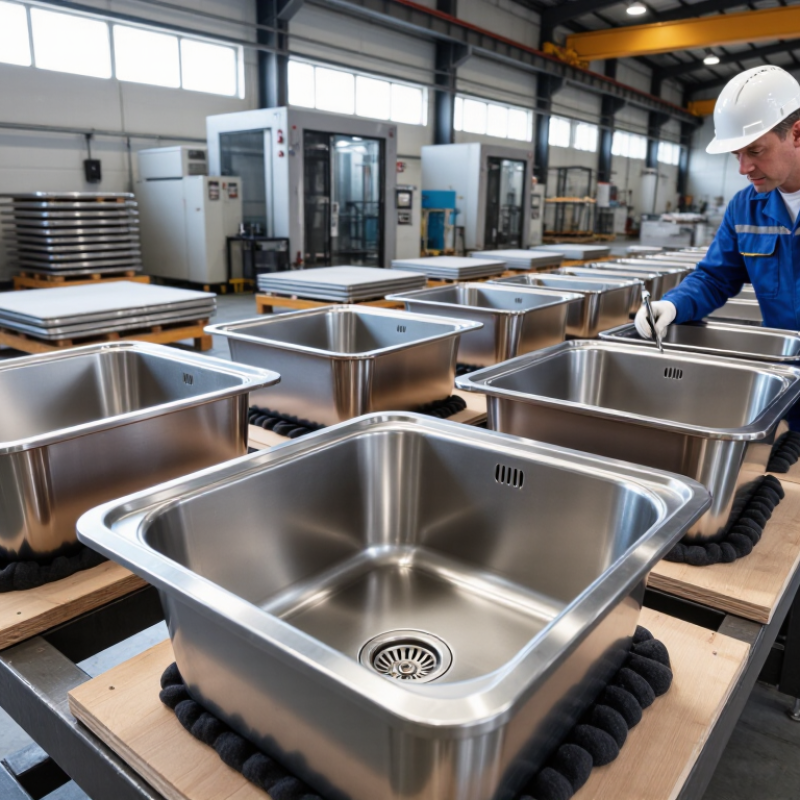
During factory inspections, examine several sinks from different production batches. Do not inspect only the best sample. One practical mistake is trusting a supplier’s certificate without matching batch records. I have seen paperwork appear complete while the inspected material remained unclear.
Ask for photos of stamped heat numbers and retain samples for comparison. Small inconsistencies deserve attention. Quality control becomes stronger when composition, workmanship, and records support each other.
Verify Supplier Capability: Require ISO 9001 and Lot-Level Material Traceability
How to Find High Quality Stainless Steel Sinks from China?
During factory evaluations, I check whether the supplier holds a valid ISO 9001 certificate. The certificate should match the factory’s legal entity, production site, and manufacturing scope. An expired document is a warning. So is a certificate covering unrelated services. Ask for the latest audit report, corrective-action records, and documented quality procedures. These records reveal whether quality control operates daily or only during inspections.
Lot-level material traceability is equally important. Each stainless steel coil should carry a heat number linked to its mill certificate. That certificate should state the grade, chemical composition, mechanical properties, and production date. Follow the number through cutting, forming, welding, polishing, and final packing. A reliable factory can show these links quickly. Missing records create unnecessary risk. Small details matter.
I also request samples from different production lots, not only showroom pieces. An independent laboratory can verify alloy composition when the order value justifies testing. During one assessment, a supplier had excellent samples but incomplete records for previous batches. The products looked convincing. The system was not. This changed my evaluation. ISO 9001 supports consistency, but traceability proves control. Keep purchase specifications, inspection photos, test results, and signed release records together. Even strong suppliers can make mistakes. Clear evidence makes those mistakes easier to detect and correct.
Test Finish and Function: Target Ra ≤0.8 μm and a 1–2% Drainage Slope
How to Find High Quality Stainless Steel Sinks from China?
A high-quality stainless steel sink should look smooth, but appearance alone proves little. During factory inspections, measure the finished surface with a calibrated profilometer. Target an average roughness, or Ra, of 0.8 μm or lower. This reduces residue retention and makes daily cleaning easier. Check several areas, including the bowl, corners, and around the drain. A polished center can hide rough edges. That mistake is easy to make.
Drainage performance also needs a practical test. The bowl should maintain a 1–2% slope toward the drain. Pour a measured cup of water across different areas. Water should move steadily without leaving wide puddles. Inspect the drain opening, welding quality, and corner radius at the same time. A sink may meet the slope target but still drain poorly if the drain fitting sits too high. Real testing reveals this.
Tips:
Request the factory’s Ra inspection records, but verify them independently. Use a surface tester and a digital level during sampling. Test at least three sinks from different production batches. Check under strong light for grinding marks, pinholes, or uneven brushing. Do not rely on one sample. Suppliers sometimes improve a sample before mass production, and that possibility deserves attention. The inspection process may feel slow, but skipped measurements often create expensive rework later.
Confirm Compliance and Quality: Apply EN 13310 and AQL 1.5 Sampling
How to Find High Quality Stainless Steel Sinks from China?
A reliable sourcing process begins with documented compliance, not attractive product photos. Ask the supplier which parts of EN 13310 apply to the sink model. This European standard covers functional requirements and test methods for domestic kitchen sinks. Request test evidence for drainage, overflow performance, dimensional stability, and resistance to temperature changes. Check whether the report identifies the exact model, material grade, thickness, and production date. A generic certificate is weak evidence.
Tips: Use AQL 1.5 sampling during pre-shipment inspection. Define the inspection lot clearly, then select cartons randomly. Inspect visible dents, scratches, welding marks, sharp edges, drain alignment, and accessory fit. AQL 1.5 is an acceptance level, not a promise that 1.5% of products will be defective. Agree on critical, major, and minor defect limits before production starts. Photograph every rejected defect beside a ruler or measurement gauge.
Stainless steel grade also needs verification. Request a material certificate, then consider a handheld XRF test for random coils or finished sinks. Measure thickness at the bowl, rim, and fixing area. Small differences matter. Deep drawing can thin corners more than expected. I have seen polished surfaces hide weak welds during a quick inspection. Slow checks reveal more. Keep records of samples, test conditions, and corrective actions. No inspection plan is flawless, especially when sampling misses an isolated defect. That risk should remain visible during supplier evaluation.