Which PVD Colored Stainless Steel Sink Is Best in 2026?
A PVD-colored sink can look striking under showroom lights. The real test comes later: daily washing, hard-water spots, cookware knocks, and cleaning routines. A Pvd Colored Stainless Steel Sink combines a stainless-steel base with a thin deposited finish, but color alone cannot predict durability. Buyers should compare the steel grade, coating process, finish consistency, warranty, and care instructions. Small details matter. A smooth, even finish around the drain and corners is easier to assess than a dramatic product photo.
Material quality provides useful context. World Stainless reported global stainless-steel melt-shop production of 58.4 million metric tonnes in 2023. That figure describes the wider stainless-steel industry, not sink production or PVD sink performance. For coating fundamentals, Donald M. Mattox is a recognized author of Handbook of Physical Vapor Deposition (PVD) Processing. His technical work explains PVD as a vacuum-based method for depositing thin films. I cannot verify a verbatim, sink-specific quotation from him, so I will not invent one. That distinction matters. In 2026, the best choice will depend on verified product specifications and realistic care needs—not color claims alone. This guide compares finish options, construction details, maintenance, and value to help identify a sink suited to real kitchens.
What PVD Means: Vacuum-Deposited Color on Stainless Steel
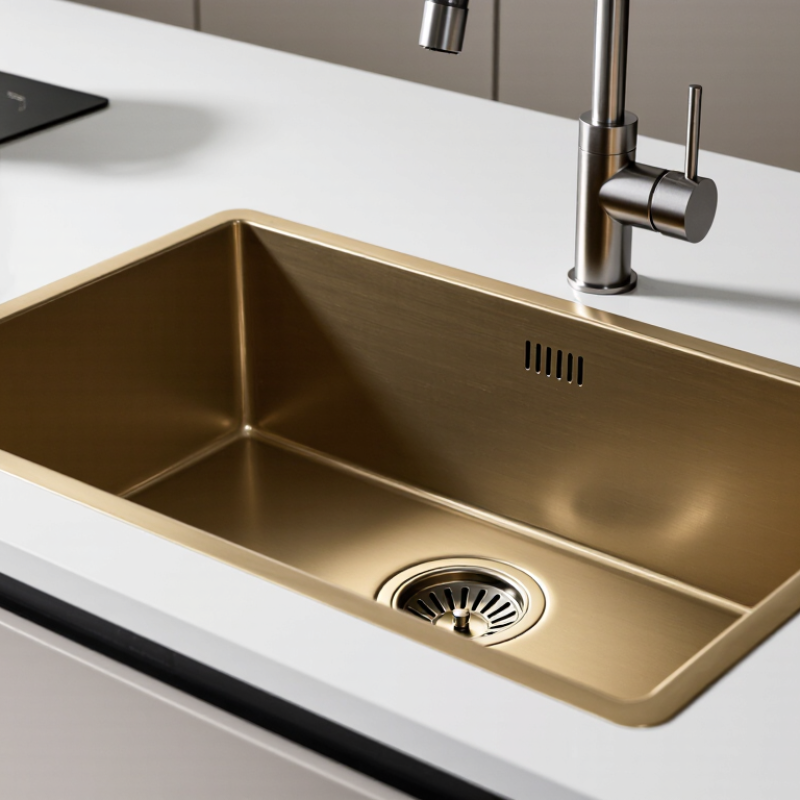
PVD means physical vapor deposition. A stainless steel sink is placed in a vacuum chamber, where a coating material is vaporized and its atoms settle onto the prepared surface. The color is a thin deposited layer, not ordinary paint. Think of it as a very fine film over the brushed steel grain. The sink’s cleaning and surface preparation matter; PVD cannot hide deep scratches or poor finishing.
Color depends on the coating material and deposition conditions. Gold, black, and bronze finishes may look similar in photos, yet differ in tone and reflectivity under kitchen lighting. World Stainless reported 58.4 million tonnes of global stainless steel production in 2023. That figure shows the scale of the base material, not the durability of any colored finish. A large steel supply is no guarantee of a well-made coating.
For a real comparison, ask whether the maker specifies coating adhesion, abrasion, and corrosion testing, and under what conditions. A sink sees cookware, cleaners, and hard water; a showroom sample does not. PVD can improve surface wear resistance, but it is not scratch-proof, and performance varies with the coating and use. That distinction is easy to miss. A small sample viewed beside your faucet may reveal more than a color chart. Even then, I would want test details, not just the word “PVD.” World Stainless, “2023 stainless steel production,” provides the production figure cited above.
Why 304 (18/8) and 316 Stainless Grades Matter for Corrosion Resistance
A colored PVD stainless steel sink is only as dependable as the steel beneath its finish. PVD adds a thin decorative layer; it does not make a weaker alloy corrosion-proof. Grade 304, often called 18/8, contains roughly 18% chromium and 8% nickel. It handles ordinary kitchen moisture well when cleaned and dried regularly. That distinction matters. Grade 316 also contains molybdenum, which improves resistance to chloride exposure. This can help where salty water or frequent contact with certain cleaners is a concern. Neither grade is immune to staining, especially around seams, drain openings, or standing water.
Tips: Ask for documentation identifying the steel grade, not just “stainless steel.” Rinse away salt and cleaner residue, then dry the sink with a soft cloth. Avoid abrasive pads; scratches can dull a colored finish.
For many homes, 304 offers a practical balance of performance and cost. In coastal settings, or kitchens with more chloride exposure, 316 may provide extra peace of mind. Still, grade alone cannot predict every outcome. Fabrication, weld quality, water chemistry, and daily care all matter. A small spot near a drain can be frustrating, and it may reflect residue or finish wear rather than a failure of the entire sink. Check the manufacturer’s care guidance before choosing a cleaning product.
How ASTM B117 Salt-Spray Testing Evaluates PVD Finish Durability
Which PVD Colored Stainless Steel Sink Is Best in 2026?
ASTM B117 salt-spray testing exposes prepared samples to a controlled salt fog, often using a 5% sodium chloride solution at 35°C. It helps compare how PVD-colored stainless steel finishes resist corrosion under consistent laboratory conditions. The test chamber is not a kitchen, though. Real sinks face splashes, drying water, cleaning products, and occasional impacts.
A useful report should identify the test duration, sample preparation, and any visible changes after exposure. Inspectors may look for rust, blistering, discoloration, or corrosion spreading from cut edges. Small defects matter. ASTM B117 describes test equipment and procedures; it does not set one universal pass-or-fail rule for every sink finish. Nor does a salt-spray result predict exactly how many years a sink will look new. That limitation is easy to overlook. For a more balanced assessment, consider the B117 results alongside coating adhesion, abrasion resistance, and clear details about the tested sample. Ask whether the sample had the same steel grade, finish, and edge treatment as the sink being considered. A polished test coupon may not represent every corner of a finished basin.
How Steel Gauge, Bowl Depth, and Sound Pads Affect Sink Performance
A PVD-colored stainless steel sink should be judged by more than its finish. The coating changes the surface appearance, but steel thickness and construction affect daily performance. Lower gauge numbers generally indicate thicker steel; a 16-gauge bowl is typically sturdier than an 18-gauge one. Still, gauge alone cannot tell the whole story. Check the sink’s stated thickness, edge support, and underside construction. A thin, flexible rim may feel less reassuring when a heavy pot rests against it. The color is only part of the choice.
Bowl depth affects both capacity and comfort. A deeper bowl can hide stacked dishes and contain splashes, but it may make reaching the drain harder, especially during longer washing sessions. Measure your cabinet and consider who uses the sink most.
Sound pads can soften the sharp clatter of cutlery and running water. They do not make a sink silent. Pad coverage and placement matter, and a thin coating on the bowl’s underside may offer less dampening than substantial pads.
There is no perfect setup. A useful check is to tap the empty bowl and listen, then picture a large pan soaking inside.
One detail I would reconsider: choosing maximum depth just because it looks generous.
How to Check 2026 Sinks Against ASME A112.19.3/CSA B45.4
Which PVD Colored Stainless Steel Sink Is Best in 2026?
To check a 2026 sink against ASME A112.19.3/CSA B45.4, start with the exact model number. The standard covers stainless steel plumbing fixtures, but a general statement on a product page is not enough. Ask for documentation showing that the specific sink model was evaluated or certified to the applicable standard. Check that the certificate or listing identifies the model and its scope. Paperwork matters. A similar-looking sink may use a different bowl, drain opening, or material thickness.
Then inspect the sink itself. Look at the bowl corners, drain opening, and underside for rough edges, uneven welds, or thin-looking areas. These checks cannot confirm compliance, but they can reveal poor workmanship. PVD color is a separate concern: compliance with the plumbing-fixture standard does not automatically prove that a finish resists scratching or fading. Ask what finish testing was performed and how cleaning products affect the coating. If possible, inspect a sample under bright light and at an angle; small marks can disappear in a showroom, then show clearly at home. I would not choose by color alone. Even careful checks leave some uncertainty, so keep the model-specific documents and warranty details before buying.