2026 Top SUS304 Stainless Steel Kitchen Faucet?
Choosing the 2026 top Sus304 Stainless Steel Kitchen Faucet requires more than judging shine, height, or online ratings. Buyers need evidence about material quality, water performance, safety, and long-term service. This guide examines those details through a practical, standards-based lens.
Recent market research from Grand View Research and Fortune Business Insights identifies renovation activity, modern kitchen design, and water-saving demand as major faucet-market drivers. However, market growth does not prove that every product performs well. A faucet may use stainless steel externally while containing weaker internal components. That distinction matters. The term “SUS304” should be supported by credible material documentation, not only a product description.
Technical compliance provides a stronger starting point. ASME A112.18.1/CSA B125.1 addresses plumbing supply fittings, including performance and durability requirements. NSF/ANSI/CAN 61 is relevant when faucet components contact drinking water. Flow rate also deserves attention. In the United States, federal requirements have historically limited kitchen faucets to 2.2 gallons per minute, while some regions apply stricter rules. Specifications must be checked for the destination market.
The best evaluation combines laboratory evidence, installation experience, warranty terms, and user feedback. Look closely at cartridge smoothness, pull-down hose retraction, spray-button resistance, and the underside of the mounting base. Small details reveal manufacturing discipline. The finish matters. Evidence matters more.
This comparison will not treat one model as universally perfect. Water pressure, sink depth, household habits, and local standards can change the result. A visually impressive faucet may still disappoint after months of daily use. That possibility deserves honest consideration.
What Is SUS304 Stainless Steel and Why It Matters in Kitchen Faucets
SUS304 stainless steel is an austenitic alloy commonly used in kitchen faucets. It usually contains about 18% chromium and 8% nickel. Chromium forms a thin protective layer on the surface. Nickel improves toughness and resistance to everyday corrosion. This matters near sinks, where water, soap, food particles, and humidity meet repeatedly. A SUS304 faucet can resist staining better than ordinary steel, but it is not completely rustproof.
Material quality depends on more than the label. During a practical inspection, check the faucet body, handle, spout, and connecting parts separately. Some products use SUS304 only for the visible shell. Internal tubes, screws, or cartridges may use different materials. Smooth welds and clean polishing also matter. Rough seams can trap moisture and minerals. Ask for material documentation or independent testing when possible. Reliable sellers should explain the steel grade clearly.
SUS304 may still develop spots in coastal homes or areas with hard water. Chloride-rich cleaners can damage its passive layer. Rinse away salt and wipe the surface dry. Avoid abrasive powders. One detail is easy to miss: stainless steel can look perfect under showroom lights. I would inspect the joints more carefully. The finish may hide weak workmanship, and even good steel cannot repair poor manufacturing.
Key Features of a High-Quality SUS304 Stainless Steel Kitchen Faucet
2026 Top SUS304 Stainless Steel Kitchen Faucet?
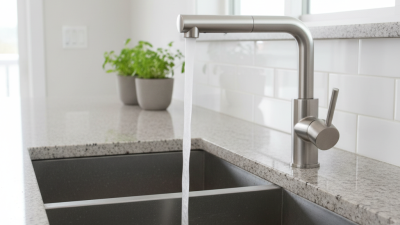
A high-quality SUS304 stainless steel kitchen faucet should begin with verified material, not attractive packaging. SUS304 contains chromium and nickel, helping it resist daily moisture, food splashes, and ordinary kitchen corrosion. Still, it is not maintenance-free. I once ignored hard-water marks on a similar faucet, and the surface became harder to clean.
A solid faucet should feel stable after installation, with little movement at the base. Smooth internal machining supports reliable water control and reduces annoying handle resistance. A ceramic cartridge is valuable because it can handle frequent opening and closing better than many basic mechanisms. Check the cartridge specifications and available replacement parts before buying.
The spray head also deserves close attention. A flexible pull-down hose should extend smoothly, return securely, and avoid sharp bends under the sink. A well-designed aerator can produce a steady stream while limiting unnecessary splashing. Look for easy-clean silicone nozzles, since mineral deposits often appear around small outlets. Small details matter.
Surface finishing must be even around the handle, spout, and mounting area. Brushed surfaces can hide fingerprints, but they still need gentle cleaning. Avoid abrasive powders and harsh chemicals that may dull the finish. Reliable manufacturers should provide material details, installation measurements, maintenance guidance, and suitable water-pressure information. One weakness remains easy to miss: a beautiful faucet may still perform poorly if the sink hole, hose length, or water connections do not match.
2026 Top SUS304 Stainless Steel Kitchen Faucet?
Key Features of a High-Quality SUS304 Stainless Steel Kitchen Faucet
SUS304 is an austenitic stainless steel commonly specified with 18.0–20.0% chromium and 8.0–10.5% nickel by mass. The remaining elements are controlled by maximum limits under common JIS specifications. Chromium supports corrosion resistance, while nickel helps maintain the stable austenitic structure and ductility expected in a durable kitchen faucet.
How to Compare the Best SUS304 Kitchen Faucets in 2026
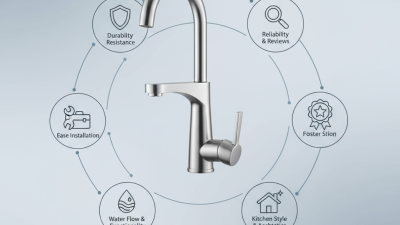
In 2026, comparing the best SUS304 kitchen faucets requires more than checking the steel label. SUS304 usually offers strong corrosion resistance for daily kitchen use. However, alloy claims should be supported by material reports or independent testing. Do not rely on polished appearance alone.
Examine the faucet body, spout, handle, and internal water passages separately. Some products use SUS304 only on visible surfaces. Ask for clear specifications about the cartridge, seals, aerator, and flexible hose. A ceramic cartridge should move smoothly without grinding or sudden resistance. Check whether the faucet has recognized water-contact compliance documentation for your market. These records improve reliability and show professional quality control.
Test the details by hand. Practical handling matters. Pull-down hoses should return gently and stay aligned after repeated use. The spray switch should work with wet fingers. Look underneath the sink, where thin fittings and awkward nuts can make installation frustrating. I once favored a heavier faucet, but its stiff hose reduced daily comfort. That mistake changed my comparison method. Weight can suggest solid construction, yet it does not prove better performance. Compare flow stability, leak protection, mounting strength, cleaning access, and spare-part availability. A sensible warranty helps, but precise coverage matters more than a long promise. Pay attention to water spots, sharp edges, loose handles, and unclear instructions before choosing.
2026 Top SUS304 Stainless Steel Kitchen Faucet? - How to Compare the Best SUS304 Kitchen Faucets in 2026
| Comparison Profile |
Installation |
Handle / Spray Design |
SUS304 Construction |
Typical Flow Rate |
Spout Height |
Spout Reach |
Cartridge |
Best Use |
Overall Rating |
Profile A
Standard Pull-Down |
Single-hole deck mount |
Single lever; pull-down spray head; dual-function stream/spray |
SUS304 body and water-contact components; stainless braided supply lines |
1.8–2.2 gallons per minute
(6.8–8.3 L/min) |
Approx. 220–245 mm |
Approx. 210–230 mm |
Ceramic disc |
Most everyday kitchens |
★★★★★ |
Profile B
Commercial-Style Coil |
Single-hole deck mount |
Single lever; exposed spring coil; detachable spray wand |
SUS304 main tube and spray wand; exposed coil may require regular cleaning |
1.8–2.2 gallons per minute
(6.8–8.3 L/min) |
Approx. 450–520 mm |
Approx. 220–250 mm |
Ceramic disc |
Large sinks and frequent washing |
★★★★☆ |
Profile C
Compact Pull-Out |
Single-hole deck mount |
Single lever; pull-out hose; stream/spray selector |
SUS304 body and pull-out head; compact hose assembly |
1.5–1.8 gallons per minute
(5.7–6.8 L/min) |
Approx. 145–180 mm |
Approx. 185–215 mm |
Ceramic disc |
Small sinks and compact counters |
★★★★☆ |
Profile D
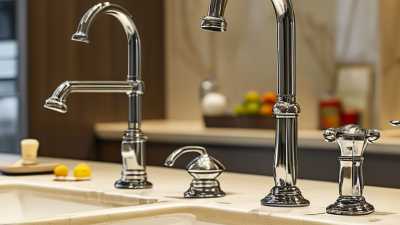
High-Arc Bridge |
Two-hole deck mount |
Two handles; high-arc fixed spout; optional side sprayer |
SUS304 spout and exposed body; separate hot and cold water controls |
1.8–2.2 gallons per minute
(6.8–8.3 L/min) |
Approx. 250–290 mm |
Approx. 210–240 mm |
Ceramic or compression valves, depending on design |
Traditional kitchens and farmhouse sinks |
★★★★☆ |
Profile E
Low-Lead Utility |
Single-hole or three-hole with escutcheon |
Single lever; fixed or pull-down spray head |
SUS304 exterior; specifications should confirm potable-water compliance for internal parts |
1.5–1.8 gallons per minute
(5.7–6.8 L/min) |
Approx. 200–235 mm |
Approx. 190–225 mm |
Ceramic disc |
Rental properties and utility sinks |
★★★★☆ |
Profile F
Sensor-Activated |
Single-hole deck mount; requires power source |
Touchless sensor; manual override lever; pull-down or fixed spray head |
SUS304 exterior; electronic sensor and battery compartment require moisture protection |
1.5–1.8 gallons per minute
(5.7–6.8 L/min) |
Approx. 230–270 mm |
Approx. 210–235 mm |
Ceramic mixing cartridge with electronic valve |
Hygiene-focused kitchens |
★★★★☆ |
How to compare:
Confirm that “SUS304” applies to the faucet body and water-contact parts, not only to the outer coating. Check the published flow rate, mounting-hole size, spout clearance, hose length, ceramic-cartridge specification, potable-water compliance, and applicable local installation standards before purchase.
Common Problems, Safety Standards, and Buying Considerations
2026 Top SUS304 Stainless Steel Kitchen Faucet?
SUS304 stainless steel is popular for its corrosion resistance and clean appearance. However, the material alone does not guarantee a safe faucet. Internal parts, solder, coatings, and water-contact plastics also matter. Look for documented compliance with NSF/ANSI/CAN 61, ASME A112.18.1, CSA B125.1, or applicable local standards. Requirements vary by market. A product labeled “lead-free” should still provide test records, not just printed packaging.
Common problems include dripping cartridges, loose connections, blocked aerators, and weak pull-out hoses. Hard water can leave white deposits around the spray head. Poorly finished joints may develop stains earlier than expected. Check the cartridge type, replacement availability, hose flexibility, and warranty conditions. A heavier body can feel stronger, but weight is not proof of quality. I have seen attractive faucets fail because the mounting plate was too thin. That detail is easy to miss.
Tips: Measure the sink holes first. Confirm the faucet height against nearby cabinets. Flush the supply lines before installation. Clean the aerator monthly. Avoid harsh chlorine cleaners. Ask for material and safety documents before buying. If water tastes metallic or the faucet shows unusual discoloration, stop using it and arrange a qualified inspection. A perfect specification sheet cannot replace careful installation.